Visual Essays of the American Justice System
Analyzing the uniqueness that is the United States criminal justice system, policing, disenfranchisement, and more.

Death Row Exonerations Analysis | May 2021
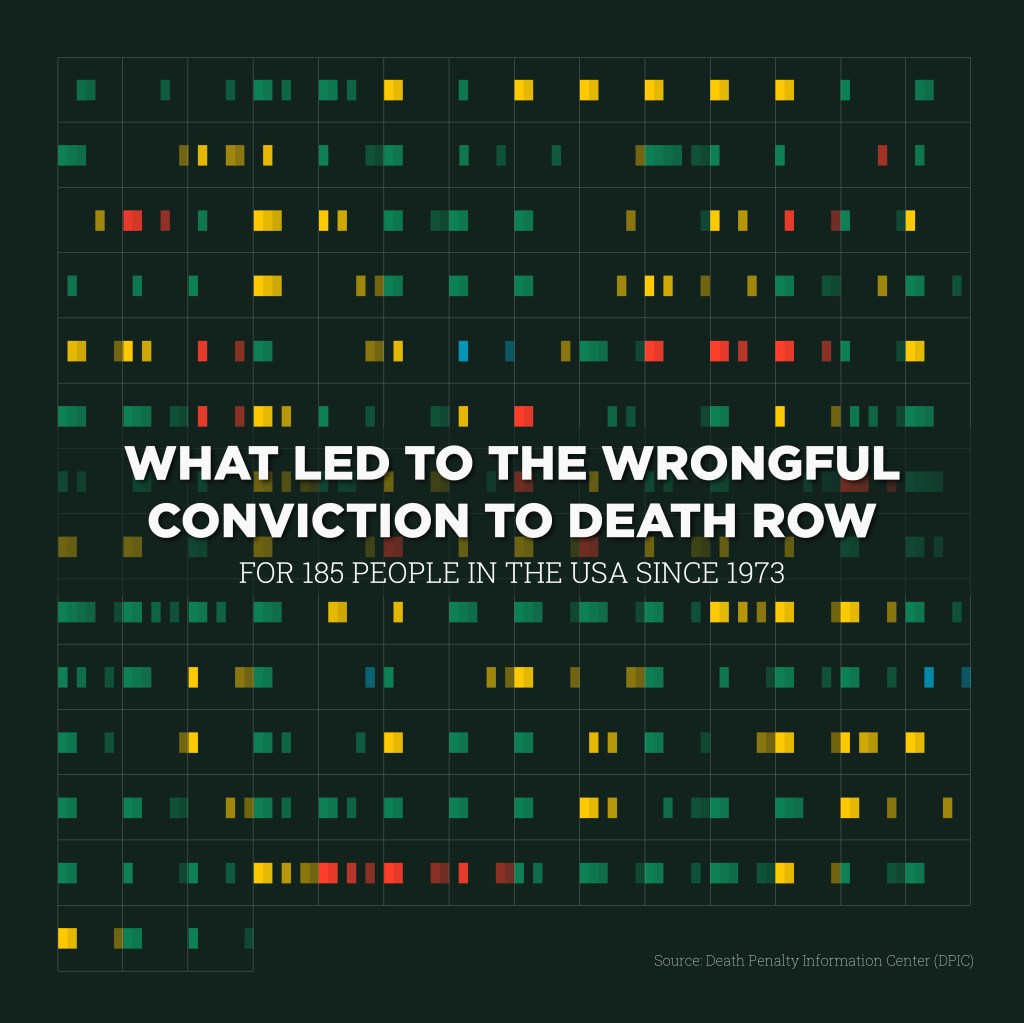
The death penalty is reserved for the most heinous of crimes that are considered to be too horrible for someone to deserve life. Yet, 185* people who have been serving time on death row while awaiting their execution were later found to be innocent and were then legally exonerated.
These people were originally sentenced by a jury that heard their case, but juries are made of people, listening to accounts of other people, and people make mistakes. But how can we have room for error in a process that leads to controlled murder?
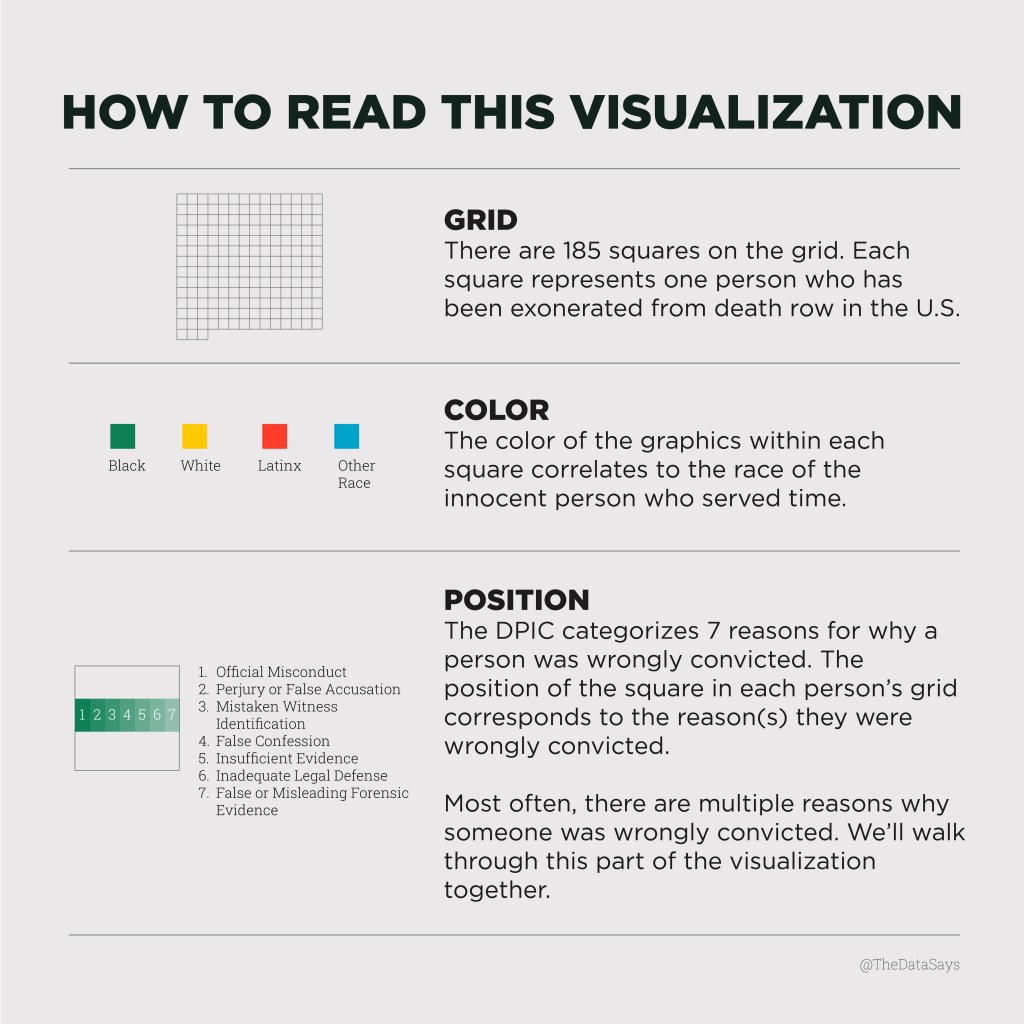
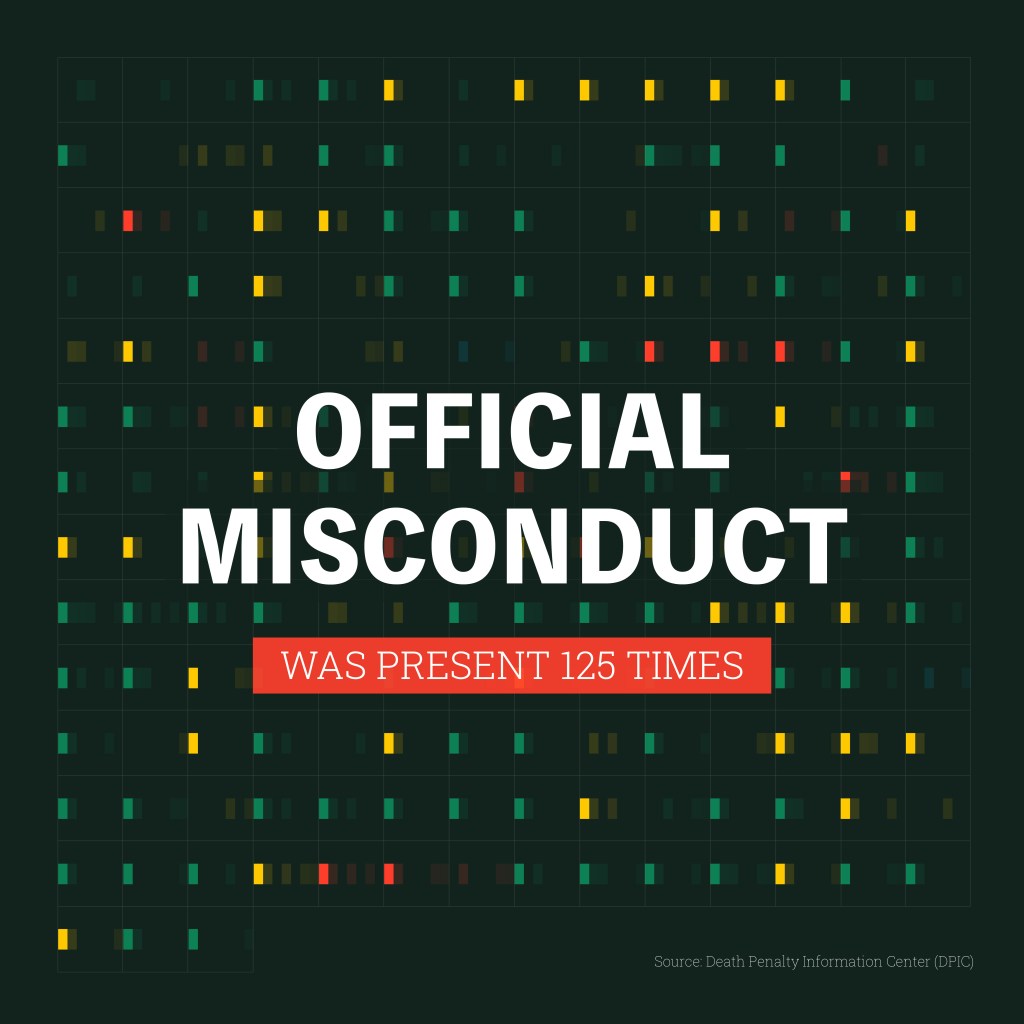
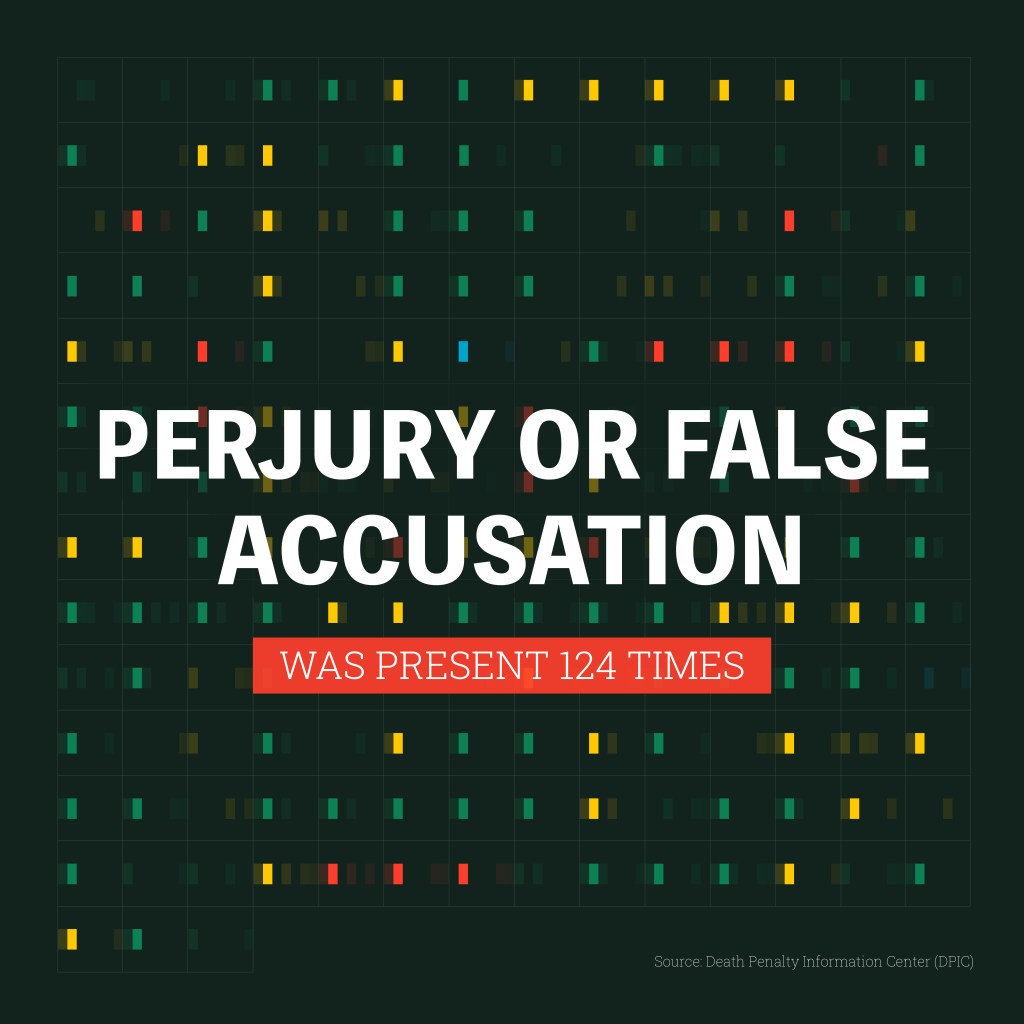
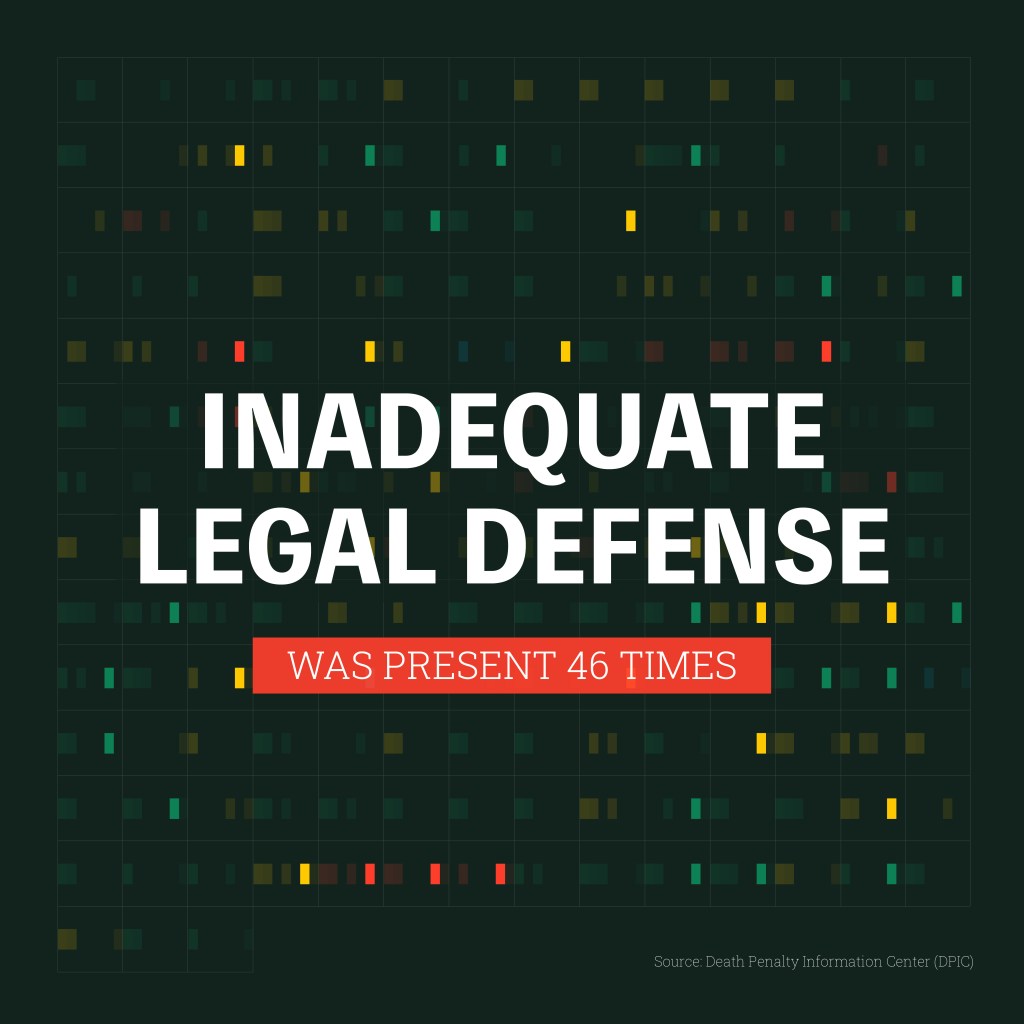
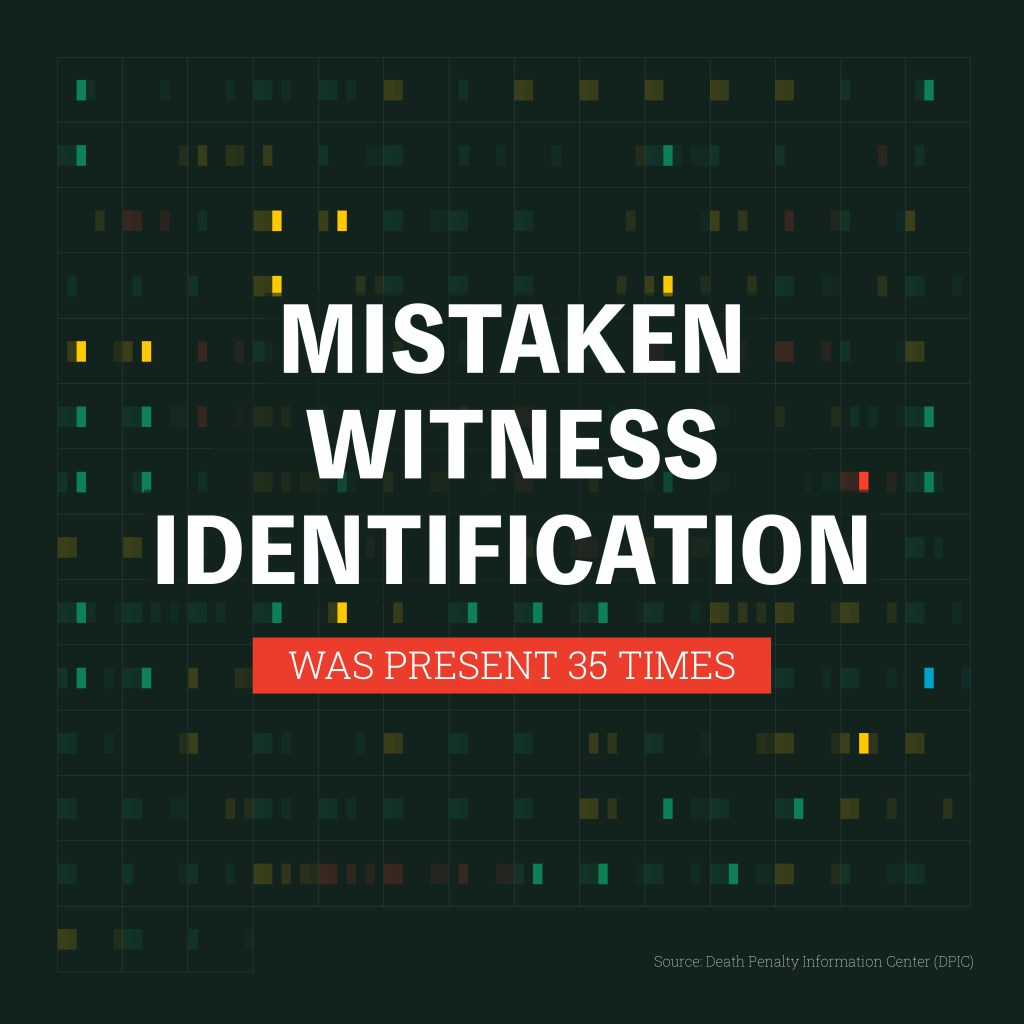
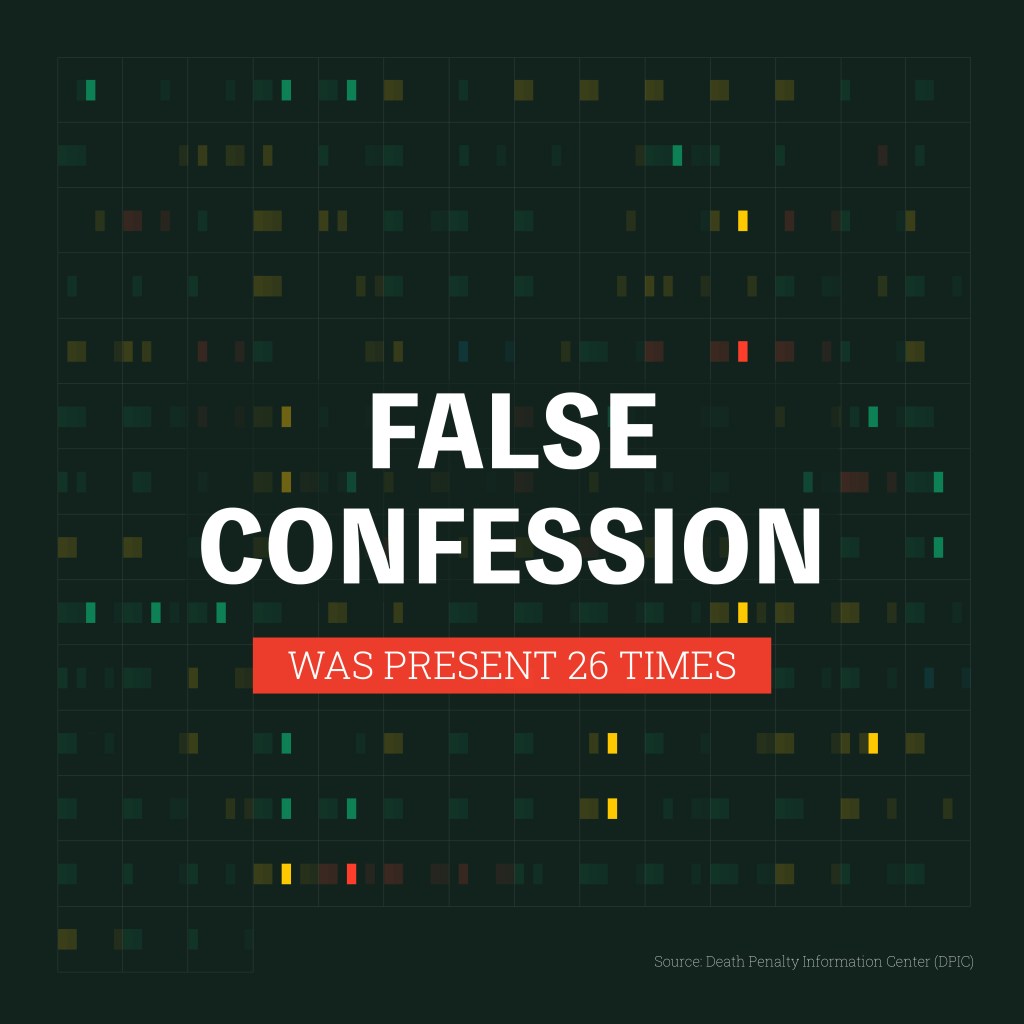
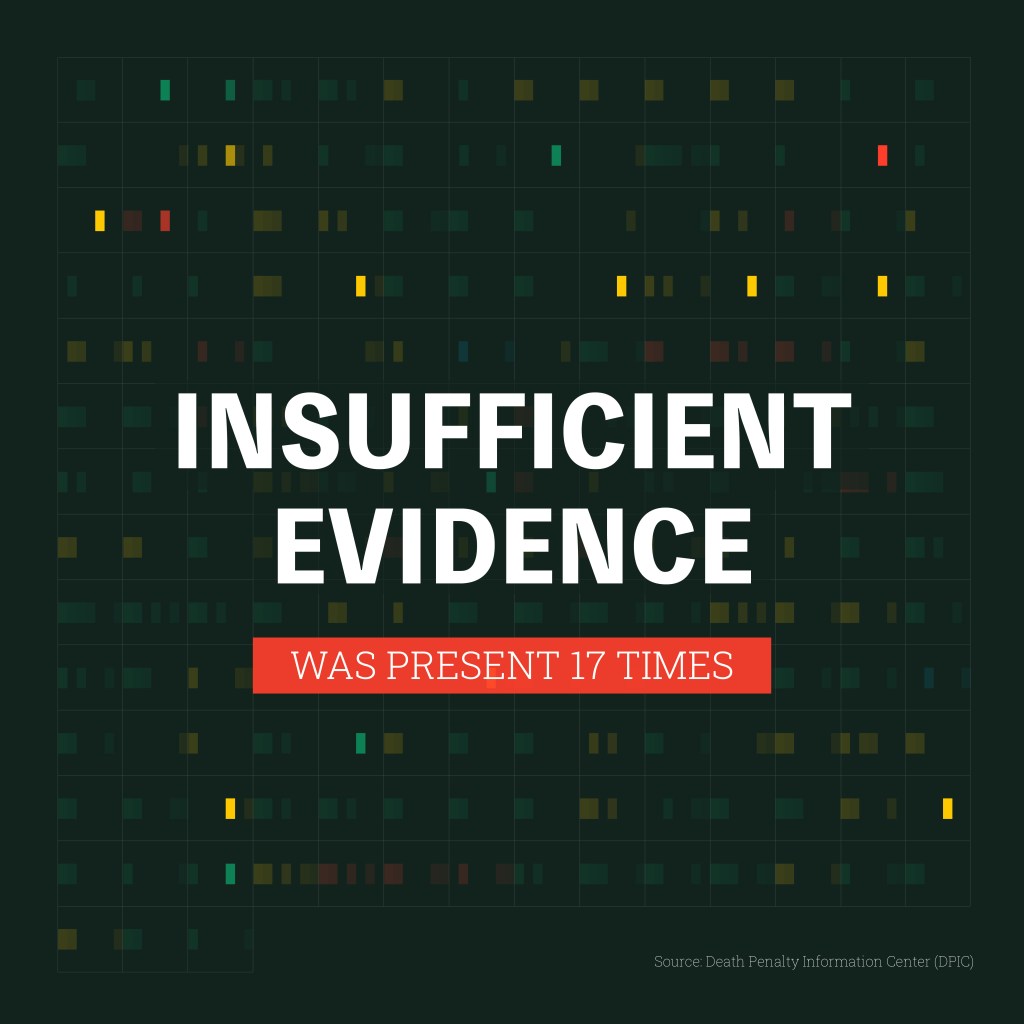
There are multiple reasons a person could have been sentenced to death row, and most often there are several. In the above images you’ll find how often each of the 7 reasons these 185 people were wrongfully sentenced to death row was found once they were legally exonerated:
- 125 cases included official misconduct
- 124 included perjury or false accusation
- 53 included false or misleading forensic evidence
- 46 included inadequate legal defense
- 35 included false witness identification
- 26 included false confession
- 17 included insufficient evidence
As of the date this was published in 2021, the Death Penalty Information Center (DPIC) has found evidence of 185 exonerations in the U.S. since the Supreme Court case of Furman v. Georgia that reinstated the death penalty.
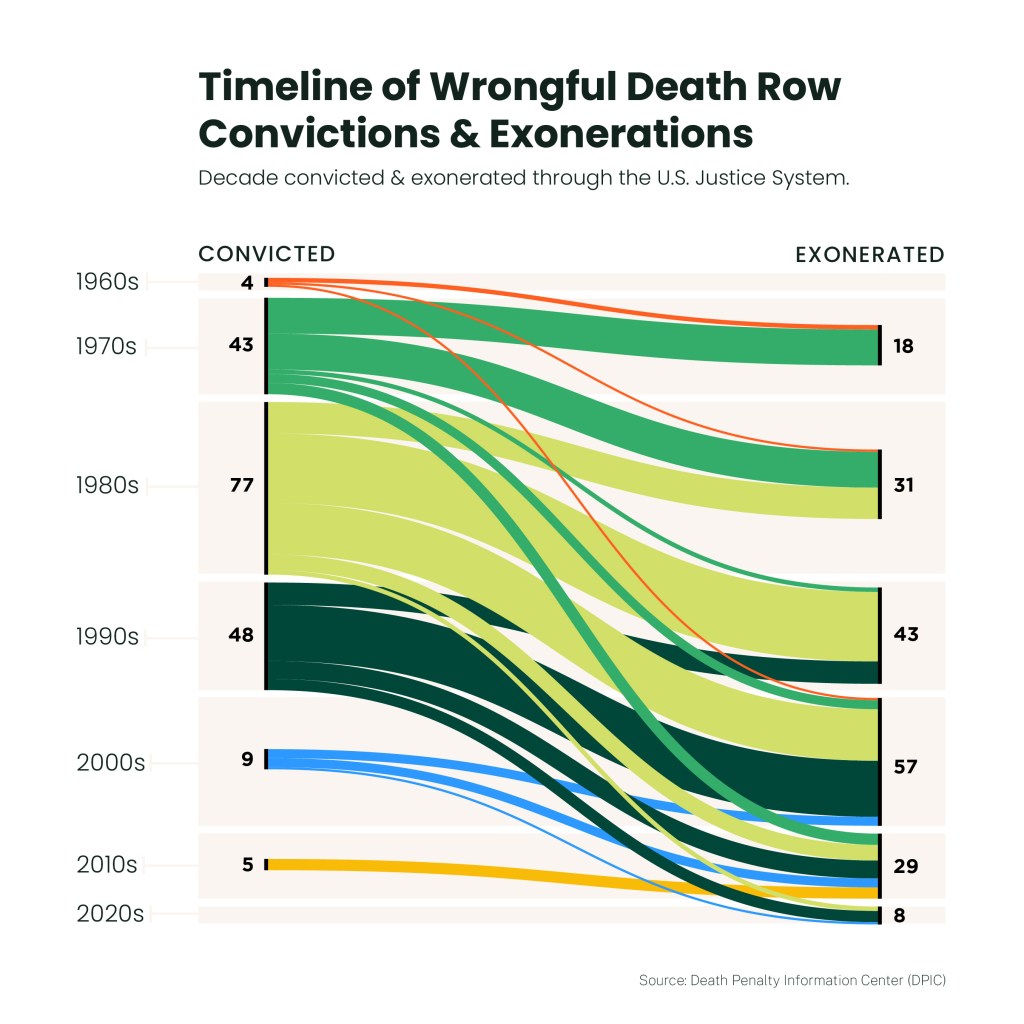
Death Row Exonerations Timeline | January 2022
When did our perception of “criminals” start to change in the U.S.? The majority of wrongful death sentences we know about occurred in the 80’s, right in the middle of the “Tough on Crime” era. The late 80’s is also the first time DNA evidence was used in a court. So, the rise in exonerations in more recent years could be attributed to the ability to use DNA evidence, and most likely a shift in the perception of “criminals,” and a better understanding of how things like racial biases and corruption lead to many sentencing decisions.
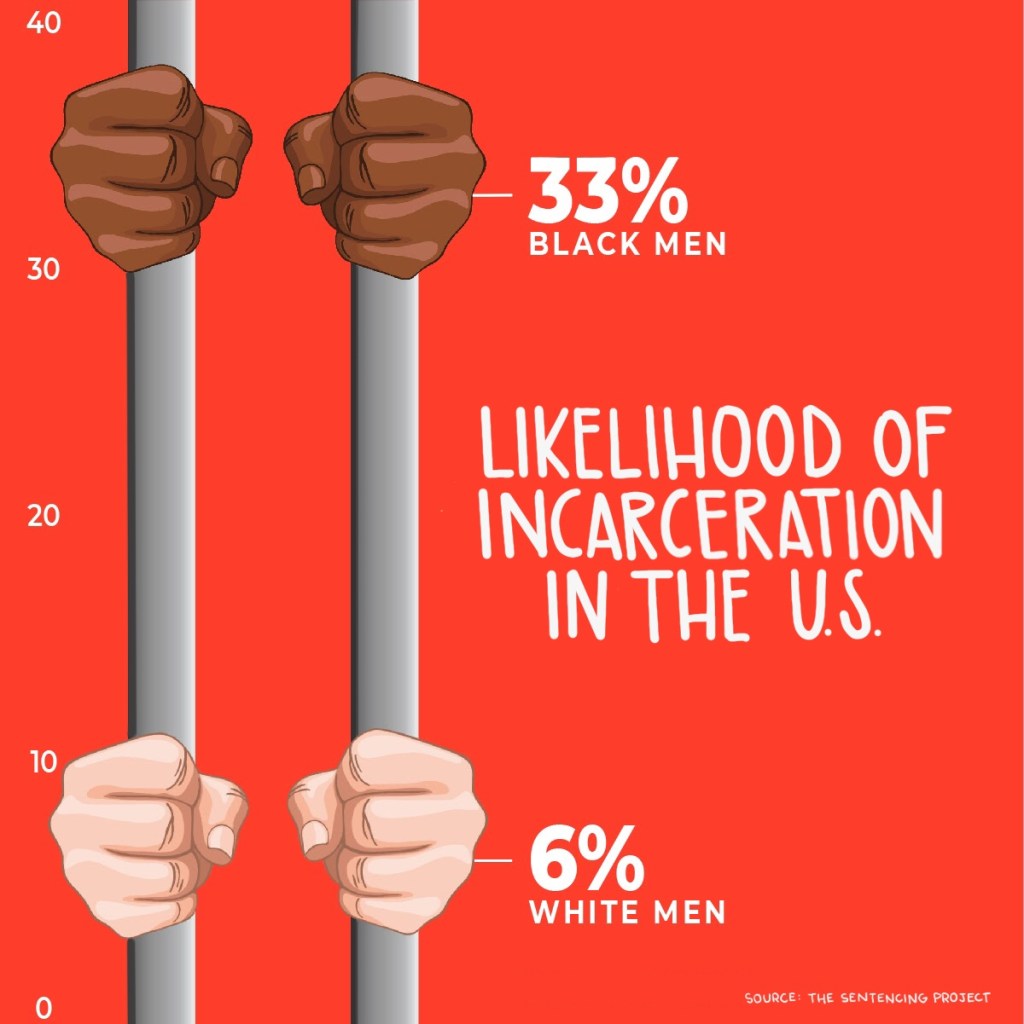
Likelihood of Incarceration | December 2020
The lifetime likelihood of incarceration is 1 in 17 for White men, and 1 in 3 for Black men in the United States. Why is that, when crime data shows that crime rates do not differ significantly by race? Racial disparities in Sentencing can be directly attributed to the War on Drugs and “tough on crime” Sentencing laws passed by presidencies and courts following the Civil Rights movement of the 50’s and 60’s, where progressive policy dismantled segregation and Jim Crow laws that preceded it. As it turns out, periods of racial control are not all that different in American history centuries from its founding.
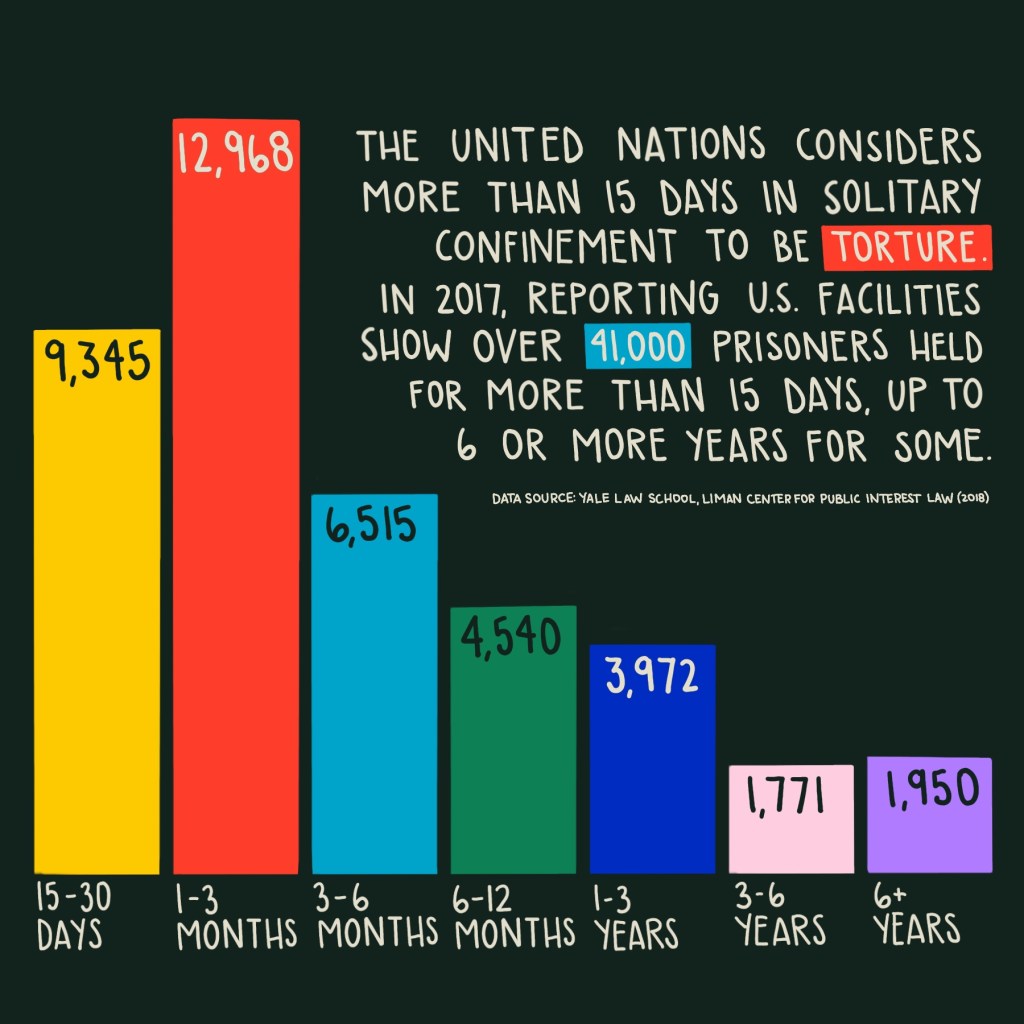
Solitary Confinement Durations | July 2020
By the standard of the UN’s Mandela Rules, the use of solitary confinement for over 15 days constitutes torture. In a study completed by Yale Law School in 2018, an estimated 61,000 people are kept in solitary confinement at any given time in the United States. By population, 2/3 of the jurisdictions reported on the span of time prisoners are held in solitary, which are the results pictured here: 41,061 people who are all reportedly held in solitary for at *least* 15 days in a single cell without human contact for at least 22 hours per day. I previously reported on how solitary confinement is disproportionately applied as punishment to people of color, particularly Blacks, Hispanics, and Latinos. Understanding the US criminal justice system is a very tangible way to see how systemic racism is and has been applied in the country.
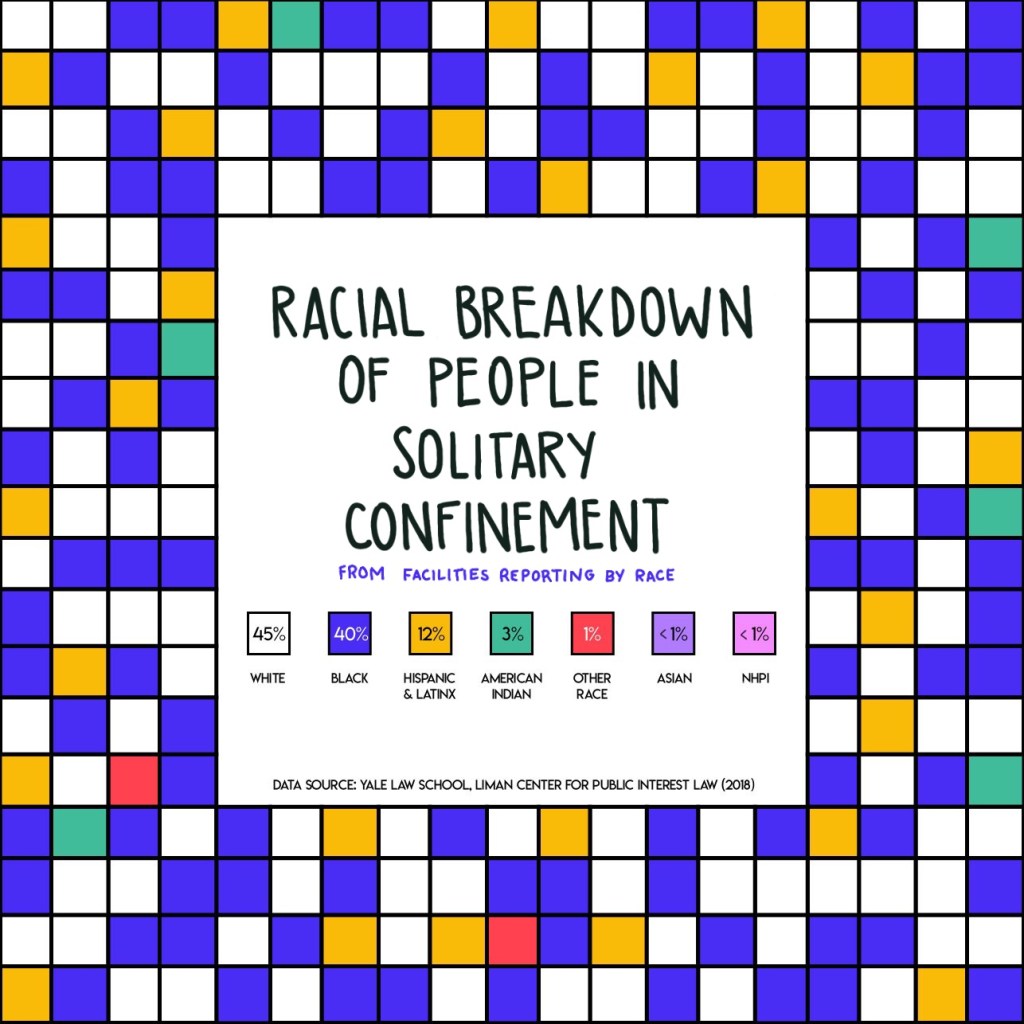
Racial Breakdown of People in Solitary | June 2020
Solitary confinement, the practice of separating prisoners from the general population and holding them in their cells for an average of 22 hours or more per day for 15 consecutive days or more, is a widely held practice in the United States. It’s use has also proven to disproportionately affect the Black population. “Reforming Restrictive Housing,” a 2018 study by Yale Law School found that approximately 61,000 people were held in solitary confinement at any given time in 2017 in the 50 US states and the District of Columbia. The study also found that men are much more likely to be in solitary confinement than women, and Black inmates “comprised a greater percentage of the restrictive housing population than they did the total custodial population.” The majority of people in solitary confinement are there for less than a year, according to reporting jurisdictions, but some people are reported to have been in solitary for over 6 consecutive years.
 The Data Says